Understanding Industrial Valves: Types, Applications & Selection
Industrial valves are essential components in many industrial systems, controlling, directing, starting, or stopping the flow of liquids and gases through pipelines. They are widely used across oil & gas, petrochemical, power generation, water treatment, manufacturing, construction, and infrastructure projects. Selecting the appropriate valve is important for maintaining efficient and reliable system operation.
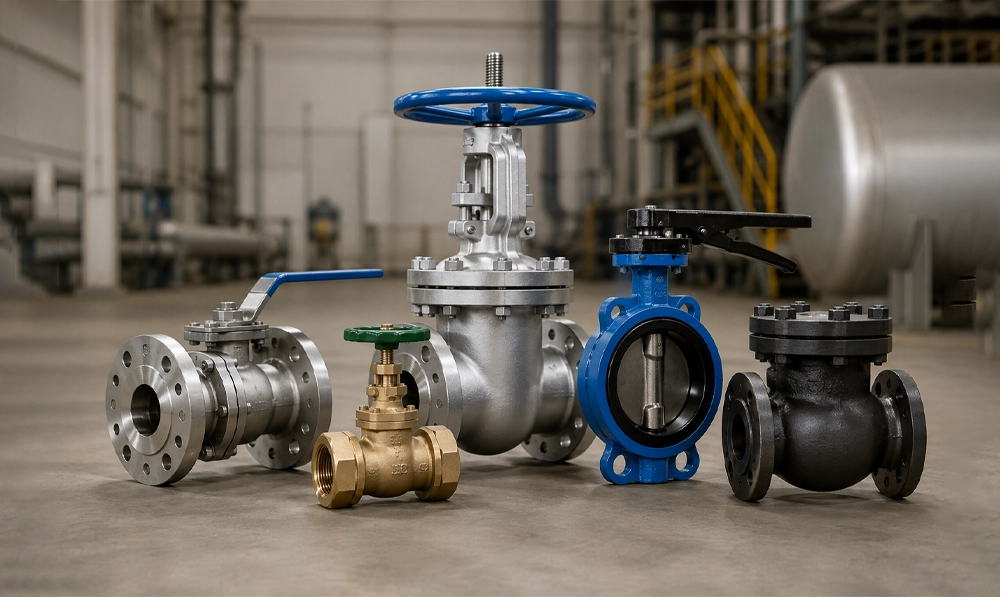
Different applications require different valve designs and operating characteristics. Common types include ball valves, gate valves, globe valves, butterfly valves, check valves, plug valves, DBB valves, and monoflange valves. Each type is designed for specific flow control, isolation, pressure, temperature, and operational requirements.
When selecting an industrial valve, factors such as operating pressure, temperature, media compatibility, flow requirements, valve size, material, connection type, and operating conditions should be considered. Working with a reliable industrial product supplier can help businesses identify suitable products based on project specifications and application requirements.
Key Considerations
- Application and service conditions
- Operating pressure and temperature
- Valve size and connection type
- Fluid or gas compatibility
- Required flow control
- Valve material and construction
- Manual or automated operation
- Maintenance requirements
- Project specifications and standards
Applications
- Oil & gas
- Petrochemical plants
- Power generation
- Water and wastewater
- Manufacturing
- Infrastructure projects
- Industrial facilities